Feeling Script Font for Scroll-Stopping Promo Graphics
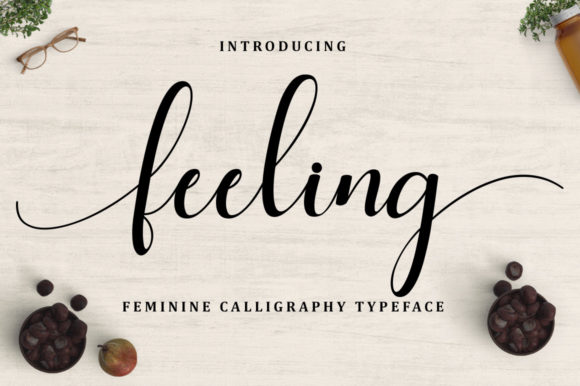
Feeling is an elegant script font designed to elevate your digital marketing visuals with charm, personality, and instant visual appeal. As a premium display font built for impact—not body text—Feeling delivers warmth and sophistication in every curve and swash. Whether you're crafting a limited-time promo, launching a seasonal campaign, or building cohesive brand assets across platforms, this script font helps your message land faster, linger longer, and convert more effectively. Its PUA encoding ensures full access to alternate glyphs, ligatures, and decorative swashes—giving you precise control over tone and polish without switching tools or layers.
Feeling for Instagram Reels Covers and Story Highlights
Feeling excels where attention spans are shortest: Instagram Reels covers and Story highlights. Its flowing, confident strokes command focus at thumbnail scale—especially when paired with high-contrast backgrounds or subtle motion blur effects. Use Feeling for short, emotive phrases like “New Drop,” “Just Landed,” or “You’re Invited”—always keeping text centered and sized large enough to read on mobile previews. Because Feeling is a script font optimized for clarity at medium-to-large sizes, it avoids the mushiness that plagues many handwritten fonts in small viewports. Pair it with a clean sans serif (like Inter or Montserrat) for captions or CTAs to maintain hierarchy and scannability.
Feeling for YouTube Thumbnails and Video Title Cards
Feeling transforms YouTube thumbnails from generic to magnetic. Unlike rigid, overused display fonts, Feeling adds human rhythm and intentionality—ideal for creators, coaches, and brands aiming to project authenticity alongside authority. Try using Feeling for primary titles (“Your First 30 Days”), emotional hooks (“This Changed Everything”), or branded series names (“The Calm Edit”). Its PUA-encoded swashes let you subtly emphasize key words—like extending the tail of the “y” in “Your” or adding a flourish to the final “s” in “Days.” Always test readability at 120px width (the typical thumbnail preview size), and avoid stacking multiple lines of Feeling; reserve it for one bold headline per frame.
Feeling for Email Headers and Landing Page Hero Text
Feeling isn’t just for social—it’s a strategic asset in email headers and landing page hero sections where first impressions drive open rates and bounce behavior. As a promo-focused script font, it signals warmth and approachability while still feeling intentional and brand-aligned. Use Feeling for subject line teasers (“You’re Getting Early Access”), preheader accents (“✨ Just for you”), or hero banners announcing flash sales, product launches, or subscriber-only perks. Because it’s not overly ornate, Feeling remains legible even with light anti-aliasing on desktop and mobile email clients—just ensure contrast ratios meet WCAG 4.5:1 minimums against background colors.
Feeling for Pinterest Pins and Blog Graphic Headers
Pinterest thrives on aesthetic cohesion—and Feeling delivers exactly that for blog headers, quote pins, and seasonal content series. Its elegant script style reinforces themes like self-care, luxury, wedding planning, artisan goods, or slow living—making it ideal for lifestyle bloggers, boutique owners, and service-based creators. When designing vertical pins (1000×1500px), use Feeling for top-line headlines only (“5 Ways to Start Fresh”) and pair with a neutral serif or geometric sans for supporting text. The PUA encoding means you can swap in stylistic alternates mid-design—for example, using a swashed “F” in “Fresh” while keeping other letters standard—to add nuance without sacrificing consistency.
Feeling for Digital Ads and Facebook Carousel Captions
In paid digital ads—especially Facebook and Instagram carousels—Feeling helps break through algorithmic fatigue by introducing tactile, human-driven typography. As a promo font, it performs best in static ad frames where emotional resonance matters more than speed of parsing: think “Join the Waitlist,” “Limited Edition Inside,” or “Last Chance to Save.” Avoid using Feeling for pricing, disclaimers, or legal text—those need strict readability. Instead, layer Feeling over clean gradient overlays or soft-focus imagery, then anchor the composition with a bold sans-serif CTA button. Remember: commercial licensing applies for all ad usage, so verify your license permits distribution in paid campaigns before scaling.
Feeling for Branded Templates and Canva Design Kits
Designers building Canva templates, Notion dashboards, or editable Figma kits will find Feeling invaluable as a branded accent font. Its PUA encoding makes it developer- and creator-friendly—no manual glyph hunting required. Embed Feeling into template instructions as the recommended font for “Headline Style” or “Signature Quote Section,” and include notes about optimal sizing (28–60pt for web, 48–96pt for print) and pairing logic. Since Feeling is a script font—not a handwriting mimic—it scales cleanly across devices and maintains integrity in exported PNGs and PDFs. For client-facing kits, always clarify licensing boundaries: Feeling is licensed for end-user customization, but resale of the font file itself requires extended rights.
Feeling for Wedding Invitations and Elegant Branding
Though rooted in digital marketing, Feeling naturally extends into high-intent physical contexts like wedding invitations, boutique packaging, and luxury service branding—all under the broader umbrella of promo and fonts with emotional weight. Its graceful ascenders, balanced spacing, and gentle contrast evoke timelessness without stiffness. Use it for monograms, envelope addressing, or “Save the Date” banners—always testing print output at 300dpi and ensuring letterforms retain crisp edges. In digital-first brand systems, Feeling works as a secondary typeface: lead with a structured sans for navigation and body copy, then deploy Feeling sparingly for logo marks, taglines, or signature campaign headers. That contrast builds memorability—and makes your brand feel both grounded and distinctive.